
Share this
I’d personally consider myself a credit card churner connoisseur. I love trying to optimize credit cards for rewards, cashback, and whatever it might be, to get the best return on the money I spend.
I could write a whole article about the right credit card for your specific scenario, but the number one thing I love to look at when I’m considering different cards is a comparison site, because it’s a quick and easy way to get a breakdown of the welcome offers available, the cards that are better for travel vs cash back, the multipliers on your rewards, and the overall pros and cons of different cards.
As you progress in credit cards, if you have a small business, you get the lucky benefit of having double the fun and double the rewards. You’re not just working with personal credit cards and their welcome offers, you also have business credit cards at play.
That opens up a whole new world of opportunity in terms of welcome offers and rewards you can stack. As I was looking for a business credit card, I found myself on a bunch of different comparison sites and thought to myself: what separates one site over another?
This will be a buyer’s guide for a small business owner deciding which comparison site to use for business credit cards, from someone who uses these sites often.
First, Two Things These Sites Actually Do

Here’s something that took me a while to figure out: almost every one of these sites does two different jobs at once. They work as a comparison tool and as an editorial roundup, blended together on the same page. Once you understand what each of those two modes is doing, the sites make a lot more sense, so let me break down what each one means before we get into the options.
Comparison Tools
Comparison tools give you a side-by-side layout. You can see the annual fee, the intro APR, the welcome bonus, the rewards type, all laid out so you can scan quickly through options. The strength here is speed, you get a fast read on the market. The weakness is that it’s lighter on the why, it shows you what’s out there but might not necessarily argue for one card over another.
Editorial Roundups
Editorial roundups are more of an article-first experience. Someone who does this for a living has been looking at these credit cards for so long that they have a stronger opinion, backed by real background that can help you when deciding between two options.
They’ll break down the tradeoffs, the pros and cons between cards, for example the difference between the Ink Business Unlimited versus the Ink Business Cash, going really in-depth on that comparison. The tradeoff is that you’re trusting a team’s opinion instead of looking at the specific stats that might matter most for your situation.
Which Mode Should You Lean On?
The thing to know is that basically all of these sites give you both at once, so it’s less about picking a “comparison site” versus an “editorial site” and more about knowing which mode you’re leaning on in the moment. If you’re just starting out and aren’t sure what matters yet, lean on the editorial content to learn the basics and get a sense of what’s out there. Once you have more experience and just want to see the stats, lean on the comparison layout instead. Same sites, different job depending on where you are. With that framing in mind, let’s get into the players.
The Criteria I Weighed Each Site On

Breadth of Options:
How many credit cards you actually have access to on the site. This matters because you want a real read on the entire market, not a narrow slice of it. The more breadth, the better.
Offer History and Historical Data:
Whether the site shows you not just the current welcome bonus, but whether that bonus is actually elevated compared to what the card has historically offered.
This is one of the most important features for a fellow credit card churner, especially since some cards only give lifetime bonuses, meaning you can only get it once, no matter how long it’s been since you last got the card.
This is where it might make sense to wait to apply if you notice the offer available is not near the all time high. Of course, if you are not trying to optimize the offer and are more interested in the multipliers it provides, that is also valid.
Business-Specific Depth:
A lot of sites treat business cards as an afterthought bolted onto their consumer content. Ideally, you want a site that has its own dedicated sections for business credit cards.
Speed to the Details:
How quickly you can get to the meat and potatoes, the welcome offer, the multipliers, the annual fee, the APR, without having to hunt for it.
The Best Comparison Sites for Small Business Credit Cards
| Site | Best For | Business Section? | Data/Coverage | Standout Feature | Personal Info Required | Downside |
| Bank rate | Widest market view | Yes | 90%+ of U.S. credit card accounts cover- ed, 4 decades in busi-ness | Only site with “best time offer” tagging to flag elevat- ed welcome bonus- es | Not required | Reads more like an article; drop-down UI is less user-friendly than compe-titors |
| Credit Cards. com | Card-only special-ists | Yes | Filter- ing by issuer and credit score, side-by-side card selec- tion | Card Match tool surfaces offers tailor- ed to your credit and needs | Yes, for Card Match | Doesn’t cover other finan- cial products beyond credit cards |
| Best Money | One-stop shop across finan- cial prod-ucts | Yes | Covers cards plus insur-ance, money trans- fer, debt consolidation, more than Bank rate | Clean- er horiz-ontal layout for toggl- ing review, pros/cons, and details | Not specified | Less special ized than card-only sites |
| Nav | Busi- ness owners early in their jour- ney | Yes (core focus) | Pulls data from Dun & Brad street, Exper-ian Busi-ness, Equi- fax Small Busi-ness, plus personal credit | Match- es you to cards you’re actua- lly likely to get approv-ed for via soft pull; claims 3.5x higher approv- al odds | Yes, account + business/per- sonal info required | Most useful featur- es (FICO SBSS score, tradeline report-ing) cost up to $75/ month |
1. Bankrate
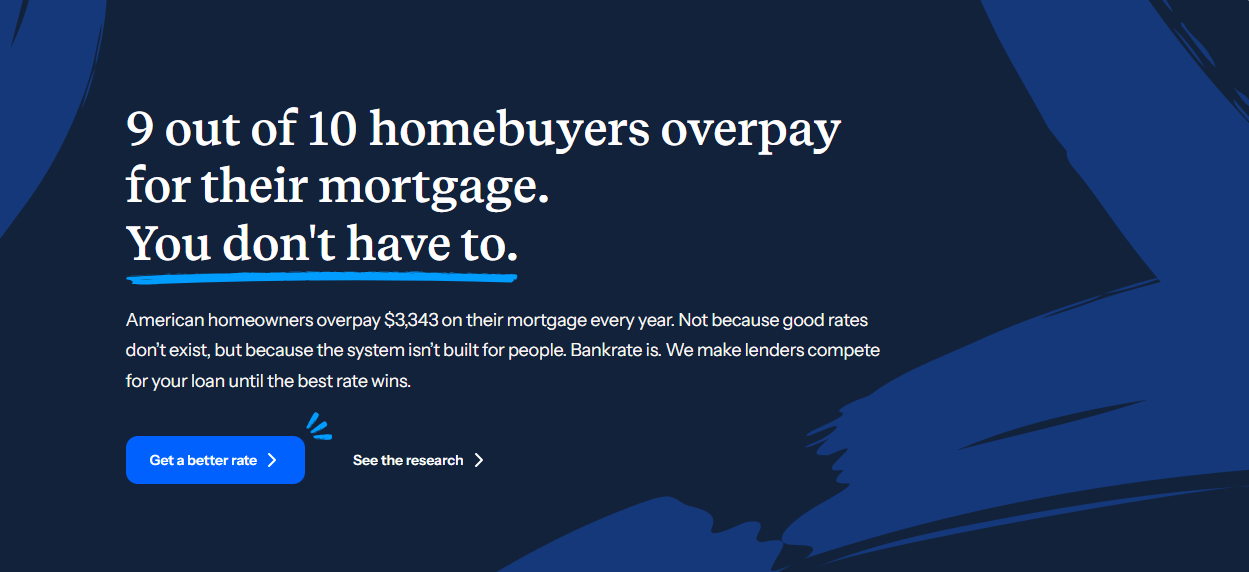
Bankrate is a mix of both a comparison tool and an editorial roundup, blending both approaches instead of committing to one. Having been in business for four decades, this is a mature, well rounded company. On breadth, it covers a solid range of categories, cash back, travel, APR, and balance transfer, with them quoting that they cover 90%+ of U.S. credit card accounts.
Which means that when you compare on Bankrate, you’re seeing almost everything the market has to offer. Its real strength is it’s the only comparison site in this article that provides “best time offer” tagging, to identify whether you are getting the best welcome bonus you could possibly get.
Separately, it provides quite a lot of information: depth on the numbers, intro APR lengths, fee structures, and the fine print on how rewards actually pay out, which makes it useful if you want to read the actual terms rather than a summary.
They also have a dedicated business credit card section on their site and provide quite a good amount of filtering options, letting you slice by issuers and credit score. As you scroll through the page, you’ll find an article which provides great background information on business credit cards, FAQ and their scoring methodology.
Besides credit cards, Bankrate casts a broader net, offering all kinds of financial products (personal loans, car loans, mortgages, banking, etc). The downside is it reads more like an article, and I’m not a fan of the drop down experience to read details. There are better options in terms of user interface.
2. CreditCards.com
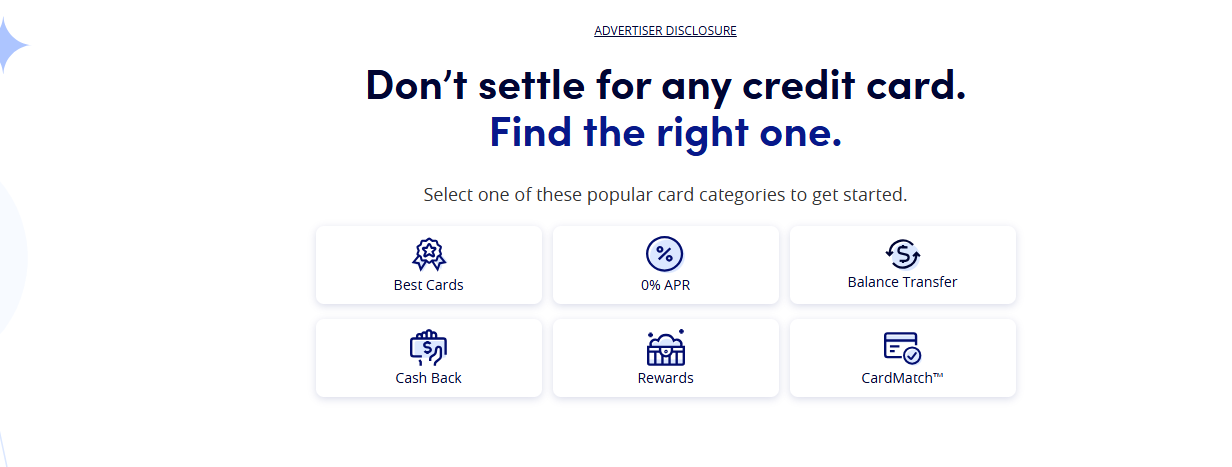
Unlike Bankrate, CreditCards.com is purely dedicated to credit cards (if it wasn’t already clear by the name). If you’re looking for a well rounded platform for all financial needs, this isn’t it. Instead they stick to their card niche, which makes this a more specialized experience.
After looking through their site, I found it to be very similar to Bankrate, mixing both comparison site and editorial review. It has a dedicated business section, lets you slice by issuer and credit score, and even lets you select specific cards you want to compare side by side.
I did find that CreditCards.com had more filtering options and even has a specific tool called CardMatch which allows you to get specialized offers based on your credit and needs.
One thing to keep in mind is that CardMatch does require you to submit some personal information to generate those matches, so if that’s not something you’re comfortable with, it’s worth considering.
3. BestMoney
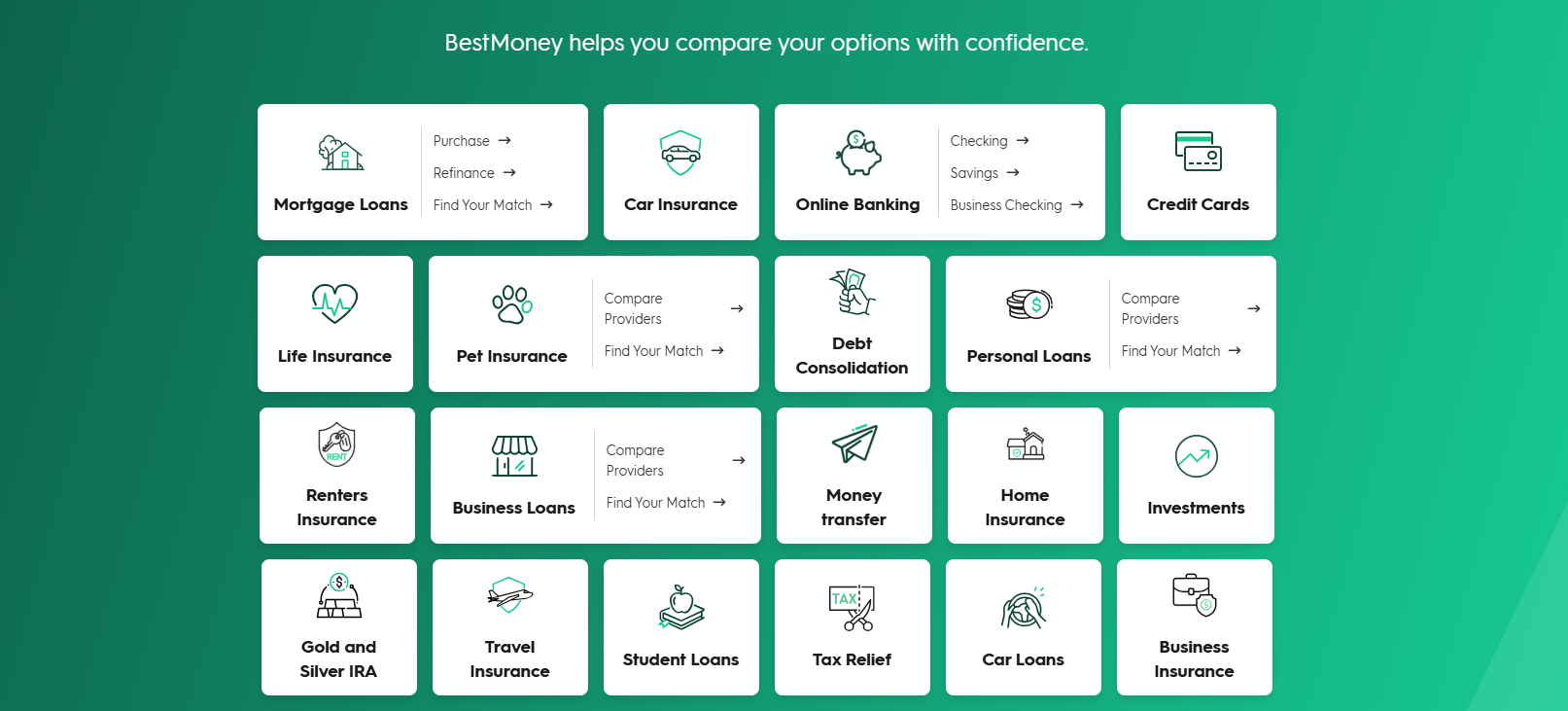
BestMoney provides a large range of financial products, not just credit cards. Founded over 11 years ago, the platform is built to streamline the complex task of comparing financial products, offering a centralized comparison hub whether you’re shopping for a mortgage, a student loan, or a business credit card.
They seem to actually have even more options than Bankrate, including:
- Insurance
- Money transfer
- Debt consolidation
That range makes it a great contender for a more well rounded platform, a one stop shop for your financial tool comparison needs.
Similar to Bankrate, they go straight to comparing cards and provide an article towards the end with very useful information. They also have a dedicated business section which is great. One thing worth noting on the business card side specifically is how BestMoney scores each card: their scoring formula combines projected user engagement with an editorial assessment based on category-specific criteria, and it’s updated whenever card offers change, which is a nice touch if you’re trying to catch a card at a genuinely good moment rather than relying on a static rating that might be stale.
Where BestMoney continues to stand out is that it visually breaks out the card stats in a cleaner fashion, letting you toggle to their review, pros and cons, and deeper details. It opens horizontally, rather than vertically, like Bankrate, making the overall experience better, in my opinion. Reviewers have specifically called out the user-friendly interface and ease of use as a standout, noting the intuitive design holds up even with the broad range of features on offer.
A couple things worth knowing going in:
- Like most sites on this list, BestMoney is ad-supported. They disclose that free access to their comparison tools comes from advertising compensation, which can influence which products get featured and how they’re positioned.
- Rate and fee updates can occasionally lag, which may affect the accuracy of a comparison if you’re checking right before applying.
4. Nav

Nav definitely leans more on comparison than editorial review, although they still carry the same informational deep dive at the bottom of the comparison page.
What makes Nav stand out from the rest is that it is built specifically around business financial products, breaking down credit and approval odds, as well as business loans, business checking, business taxes, and even insurance, to name a few. This makes it more of a one stop shop for business finance tool needs than the rest.
Separately, Nav shows you cards you’re actually likely to get approved for, based on your real business and personal credit profile. You create a free account and Nav pulls your business credit data from the commercial bureaus (Dun & Bradstreet, Experian Business, Equifax Small Business) plus your personal credit, and it matches you to cards and financing with a soft pull. Nav claims their matches are 3.5 times more likely to result in approval than applying blind.
Worth noting that, like CardMatch, Nav requires you to create an account and submit your personal and business information to generate those matches, so if handing that over isn’t something you’re comfortable with, it’s something to weigh.
For a business owner who is just starting out and might not have much credit history yet, this is genuinely valuable. There’s no bigger waste than applying for a card you were never going to get and eating a hard pull for nothing. Nav also monitors your business credit over time, which the pure comparison sites don’t do at all.
The tradeoff is the most useful features (detailed reports, the FICO SBSS score, tradeline reporting) are not free and can cost as much as $75 a month.
Choosing the Right Comparison Site for Your Small Business

After going through all of these, the biggest thing I realized is that most of these comparison sites have a similar look and feel to them. Every one of them leads with a comparison layout and backs it up with editorial content, methodology, and an FAQ further down the page. So the real decision comes down to what you actually need out of the site.
If you want the widest possible view of the market with the ability to spot whether an offer is actually elevated, Bankrate is where I’d start. The “best time to get” tagging is quite valuable and, for anyone trying to optimize a welcome bonus (like me) it’s the single most useful feature on this list.
If you want a card-focused experience with strong filtering and a tool that surfaces offers tailored to your profile, CreditCards.com and its CardMatch feature are worth your time, especially if you don’t need anything beyond credit cards. Just remember CardMatch wants some personal information before it shows you those tailored offers.
If you want a one-stop shop for more than just credit cards, and a cleaner interface while you’re at it, BestMoney covers the widest range of financial products of the group and lays the card details out in a way I personally found easier to work through.
And if you’re a business owner who’s early in the journey or unsure what you’ll get approved for, start with Nav. Checking your approval odds backed by a full credit analysis is truly valuable. Just know that, like CardMatch, it asks for your information up front to do that. Nav also stands out as the main Business platform versus the rest which tailor more to consumers.