
Share this
I like debt consolidation platforms for one simple reason: they can make a messy borrowing search far more organized. Instead of bouncing from lender to lender, you answer a few questions once, review prequalified offers, and compare rates, fees, terms, and approval fit in one place.
At a high level, these platforms all follow the same flow. You provide basic details like loan purpose, credit profile, income, and desired loan amount, and the site will match you with lenders or curated loan options so you can compare estimated APRs, fees, and repayment terms before you formally apply.
However, it’s important to remember that these platforms are marketplaces, publishers, or hybrid comparison tools. This means the quality of your experience depends on how clearly the site explains who is in its network, how it ranks products, and whether it gives you enough detail to compare apples to apples. Even then, some comparison sites are better at broad lender coverage, some are better at education, while others still are better at explaining fees and filtering out bad fits before you waste your time.
So for this roundup, I focused on the things that matter most when you are trying to consolidate debt without making a bad situation worse: lender coverage, eligibility filters, transparency, rate-shopping tools, and the overall borrower experience. I also looked at whether each platform makes it easy to compare offers without harming your credit during the prequalification stage, since soft-pull shopping is a major advantage of using these sites in the first place.
Here’s my criteria for choosing the best sites to compare debt consolidation loans:
- Easy comparisons of real loan options (not just a library of generic articles)
- Strong transparency around methodology, rankings, or compensation
- Useful filters for different borrower profiles, from prime borrowers hunting for lower APRs to fair-credit borrowers trying to stabilize payments
- Clear rate and fee information
- A smooth user experience that respects the fact that borrowers in debt trouble don’t need any more friction
My Top 5 Picks for the Best Debt Consolidation Comparison Sites
1. BestMoney
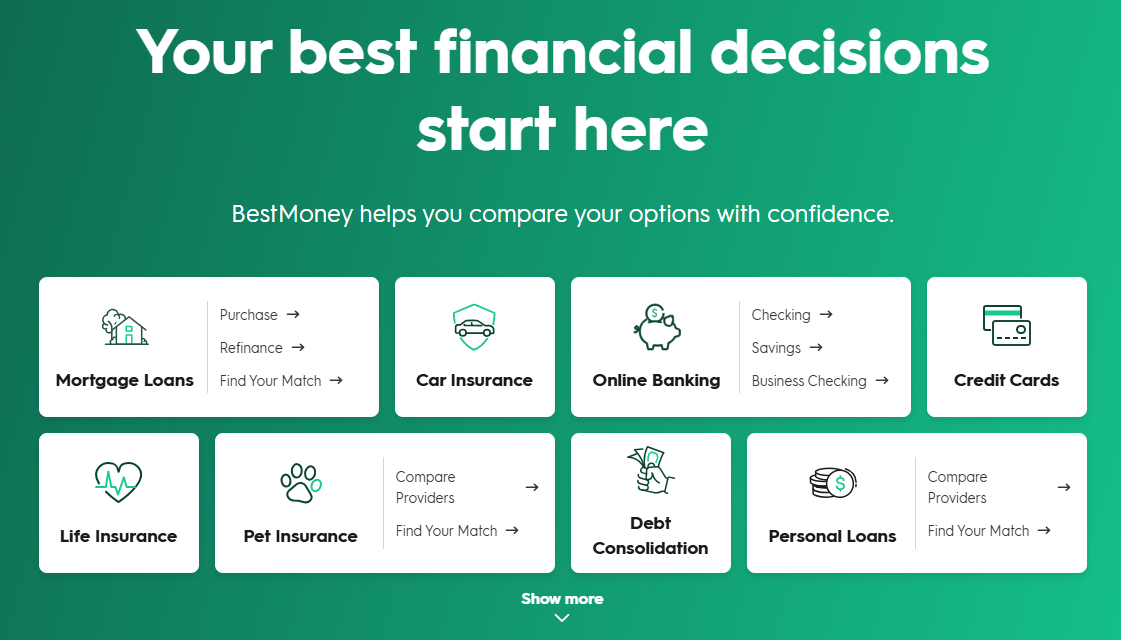
BestMoney is a financial comparison platform built to help consumers compare debt-consolidation offers, reviews, and educational content in one place. It walks users through a simple three-step flow: answer a few questions, receive custom offers from lenders, and choose the right loan. Its broader editorial positioning centers on transparent comparisons, expert insights, and easy-to-read financial guidance.
What they do well
BestMoney’s biggest strength is balance. It’s not just a lead form, and it’s not just a publisher. Instead, it blends a comparison flow with review content and plain-English education, which is useful for borrowers who still need help deciding whether consolidation even makes sense.
Its debt-consolidation methodology is also more explicit than you’d expect compared to a platform like NerdWallet. It evaluates providers across availability, rates and fees, user experience, and customer service, specifically looking at issues like state availability, application requirements, APR ranges, origination fees, online application flow, soft versus hard inquiry impact, and support quality.
That’s a solid framework for a borrower-facing comparison site.
Where they fall short
Like many comparison platforms, BestMoney is advertising-supported, and it says compensation may influence placement, order, and scoring. It also does not claim to show every provider in the market — that’s normal in this space, but borrowers still need to remember that “best” on a comparison page does not mean “every lender worth checking.”
Pros
- Easy to use and clear about how the comparison flow works
- Direct about the criteria it uses to rate debt-consolidation companies
- Equally strong on discovery and context
Cons
- Still a partner-driven platform, so shoppers who want a full market scan may want to cross-check at least one other source
Best for: Borrowers who want a guided search, side-by-side comparison help, and enough explanation to avoid picking a loan on rate alone
2. LendingTree
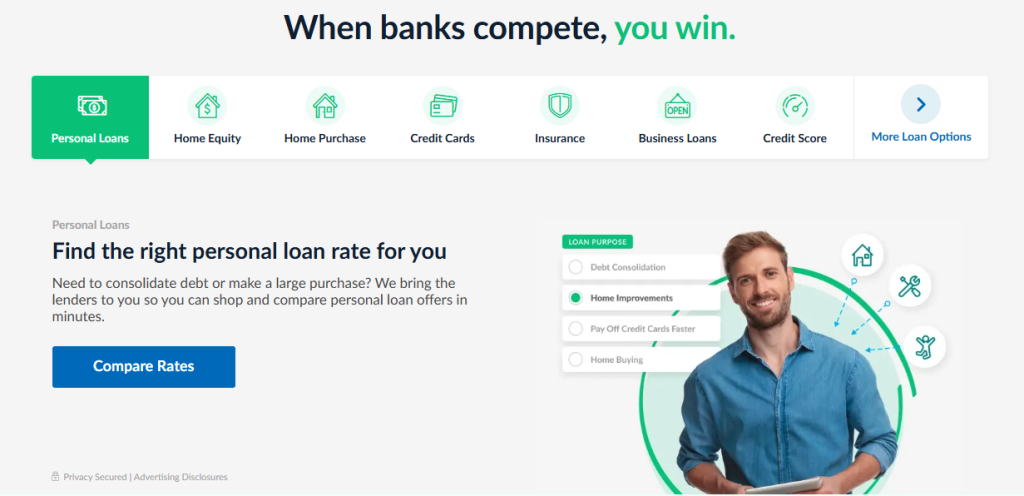
LendingTree is one of the best-known loan marketplaces in the space, letting users compare loans from top lenders freely, simply, and securely. They back this marketplace with a large amount of debt-consolidation content, including rate data by credit score, lender picks, and alternatives to consolidation loans.
What they do well
Shining in scale and borrower segmentation, LendingTree is built for shopping offers, and their editorial coverage is strong enough to help borrowers understand what kinds of debt can be consolidated and how rates may shift by credit tier.
They also publish marketplace data, including average APRs by credit score band for debt-consolidation borrowers in late 2025, which gives users a more grounded sense of expectations. Finally, they emphasize that prequalification uses a soft inquiry and does not hurt credit, which I always consider a plus.
Where they fall short
LendingTree can feel more marketplace-first than education-first. This is great if you want speed, but some borrowers may find the experience a little more transactional than advisory. In my view, they’re strongest for shoppers who already know they want a consolidation loan and need options quickly.
Pros
- Strong lender-shopping functionalities
- Useful credit-tier data
- Plentiful content on debt consolidation
Cons
- More of a marketplace engine than a full decision-support platform for new borrowers
Best for: Borrowers who want broad shopping power and fast offer discovery — especially those who already know what they’re looking for
3. NerdWallet

NerdWallet is a personal finance publisher with a loan marketplace layer. After users share their information, the platform will analyze potential loans before sending them to a lender or letting them pick from multiple options. They also publish detailed personal-loan rating methodologies and cover more than 30 fintech companies and financial institutions that offer personal loans in more than one state.
What they do well
NerdWallet’s biggest edge is trust-building, putting more methodological detail in front of readers than many rivals. Their personal-loan ratings weigh affordability, customer experience, underwriting and eligibility, loan flexibility, and the application process, and I like that they specifically consider things like direct payment to creditors on debt-consolidation loans, state availability, ability to pre-qualify, and funding speed.
That’s the kind of framework that helps people compare beyond teaser APRs.
Where they fall short
NerdWallet’s core identity is still editorial — a positive for research-heavy users, but borrowers who want a pure marketplace feel may prefer LendingTree or Credible. The process can also route you directly to a lender in some cases instead of always presenting a broad comparison set.
Pros
- Excellent transparency in methodology
- Very strong educational content
- Solid lender-evaluation standards
Cons
- Not always as direct or as broad as a marketplace-first platform
- Prepare to be educated, whether you want to be or not
Best for: Borrowers who want to understand the loan decision before they click into an application
4. Bankrate
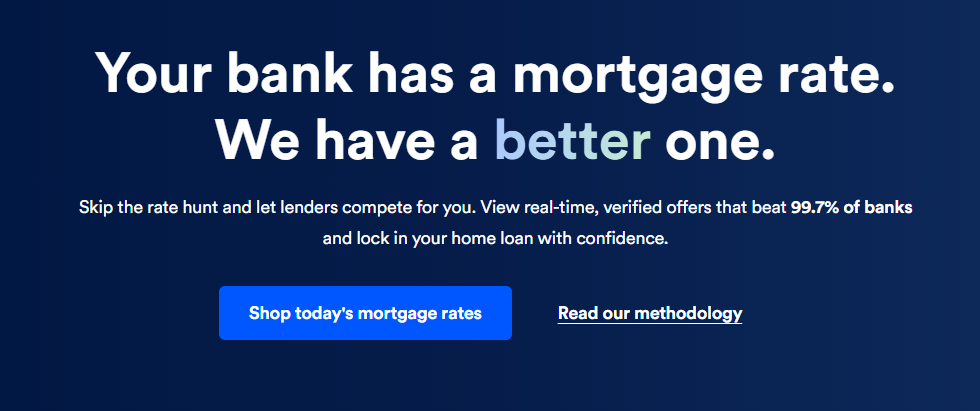
Bankrate is a comparison publisher and lead-generation platform that lets users compare debt-consolidation loans, fill out a quick form, and get matched with lenders for prequalification. They also have a formal personal-loan review methodology and Bankrate Score system.
What they do well
Bankrate is strong on structure, and their review methodology breaks lender scoring into availability, affordability, customer experience, and transparency, with published weighting — very useful for borrowers who care about more than just rate. Prequalification won’t impact your credit score, which really matters when you’re shopping carefully.
Where they fall short
They’re advertising-supported and do not include every product on the market. In practice, that means it works well as a comparison checkpoint, but I wouldn’t rely on it as the only place to shop. It’s also a little less intuitive than the cleaner guided flows on BestMoney or Credible.
Pros
- Clear scoring logic
- Reputable brand recognition
- Useful mix of lender reviews and rate-shopping tools
Cons
- Less complete than a full-market search
- Not as streamlined as the best platforms in the space
Best for: Borrowers who want research discipline and a familiar financial-publishing brand
5. Credible
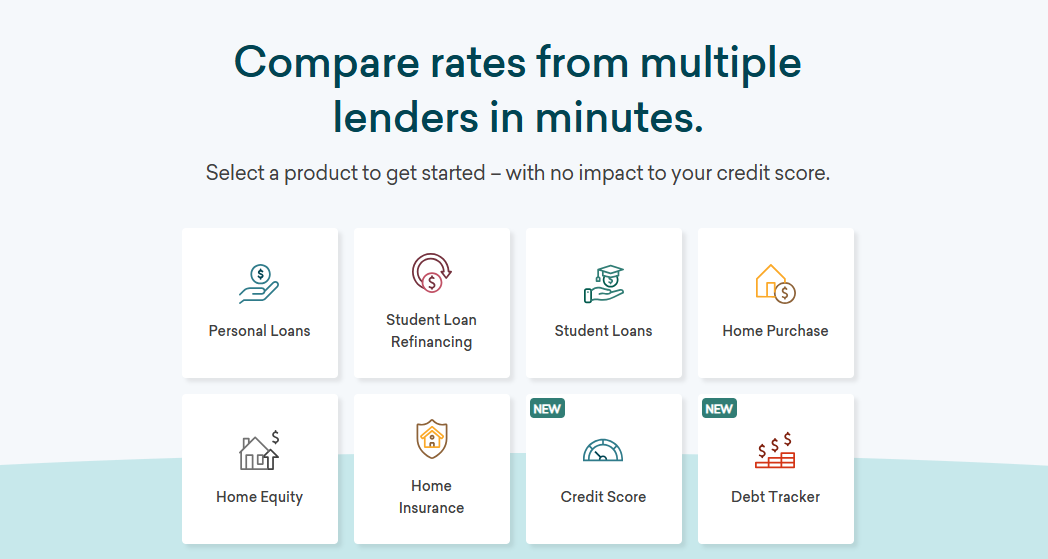
Credible is a comparison marketplace that lets users compare rates from multiple lenders in minutes. Doing so has no impact on credit score, which is always a plus. Their personal-loan hub covers debt-consolidation loans, bad-credit loans, and related borrower tools, and they charge users no fees of any sort for personal loans.
What they do well
Credible’s main advantage is speed and simplicity, designed to get users from interest to rate comparison fast. They clearly state that lender compensation does not affect where lenders appear on the prequalified-rates dashboard, which is a helpful distinction in a category where ranking bias is always a fair question. I also like that Credible pairs their marketplace with tools like credit score monitoring and debt tracking.
Where they fall short
Credible feels more utility-driven than advisory. If you want a lot of deep comparison articles or a broader editorial layer around the borrowing decision, it’s not as rich as something like NerdWallet.
Pros
- Fast rate comparison
- No borrower fees from the platform
- Clean user path
Cons
- Less depth on the educational side
Best for: Borrowers who already know they need a consolidation loan and want a clean, quick comparison flow
The Best Site to Compare Debt Consolidation Loans: This CPA’s Verdict

The best real-world approach is not to trust one site blindly. Instead, start with a strong comparison platform, review prequalified offers, and then cross-check at least one more source before you apply.
But if I were advising a borrower on one site to start with, I would lean toward BestMoney. They do a nice job of combining practical comparison tools with enough transparency and educational support to help people make a smarter borrowing decision. Their methodology is clear, their guided flow is simple, and they’re a good fit for people who want help narrowing the field without drowning in lender pages.