
Share this
I work from home full-time, which theoretically makes me Eight Sleep’s dream customer. My bedroom is steps away from where I work; I don’t have a commute separating sleep from my workday, and when I sleep terribly, there’s nowhere for that fatigue to hide. I simply walk to my computer and attempt to be a functioning professional.
I’ve spent several months sleeping on the Eight Sleep Pod 5 and, as a Certified Sleep Science Coach who has spent years testing mattresses and sleep products, I can confidently say that the Pod has improved my sleep. I’m an extremely hot sleeper, and its active cooling has virtually eliminated the nights when I wake up drenched in sweat. But does that make a sleep system costing thousands of dollars a smart investment for someone who works from home?
If you’re considering the Pod as a productivity or wellness investment because you work from home, I think the math needs to start somewhere other than the price tag: What sleep problem are you actually trying to solve?
WFH Doesn’t Always Equal Better Sleep

Yes, working from home can eliminate a commute and give you more control over your schedule, but that flexibility doesn’t guarantee good sleep. If anything, it can make the boundaries between working and not working incredibly blurry, and I know from experience. Your laptop is always there. You can answer one more email. There’s no train to catch or office to leave at 5 PM. And when you have a rough night, your bed may be dangerously accessible when the afternoon slump arrives.
Sleep does matter for how we function during the day. The National Heart, Lung, and Blood Institute notes that sleep deficiency can affect learning, focus, decision-making, problem-solving, reaction time, and work performance. That doesn’t mean an Eight Sleep Pod will make you better at your job, however.
The Pod can’t make you stop working at 11 PM or create a consistent sleep schedule you will actually follow. And it certainly won’t stop you from scrolling in bed or fix the fact that your home office is slowly colonizing your bedroom.
What Does the Eight Sleep Pod Actually Change?
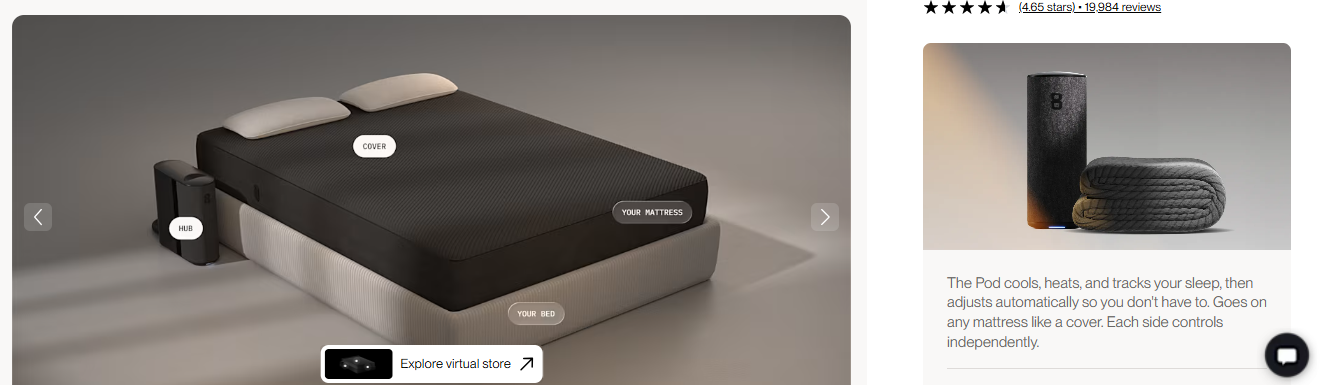
What Eight Sleep does is change your sleep environment. The Pod 5 is a temperature-regulating cover that goes over your existing mattress. Water circulates through the Cover, allowing the system to actively heat or cool each side of the bed independently. Eight Sleep currently says the Pod can cool down to 55ºF or heat up to 110ºF. It also tracks metrics including sleep stages, heart rate, HRV, and snoring through sensors built into the Cover.
Then there’s Autopilot. Rather than setting one temperature and leaving it there all night, Autopilot automatically adjusts your bed’s temperature while you sleep. For me, this is where Eight Sleep goes from an interesting sleep gadget to something that has genuinely affected my sleep.
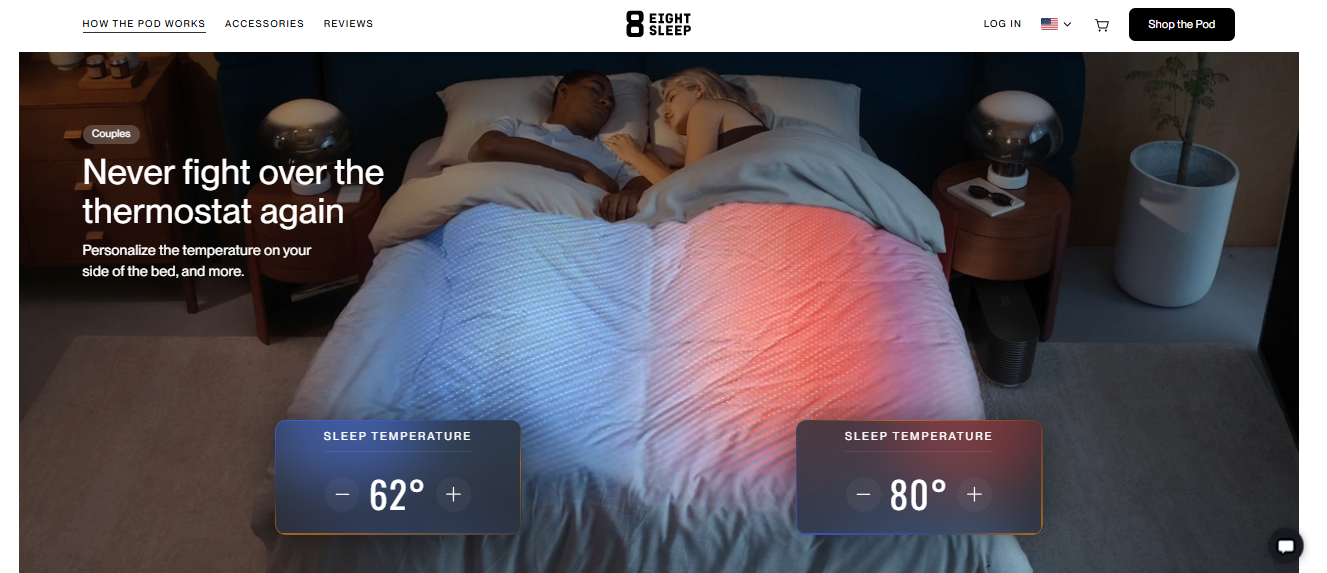
Before using the Pod, I regularly woke up drenched in sweat. After several months using Eight Sleep, that doesn’t really happen anymore. Alternatively, my husband hates being cold, so the dual-zone temperature control solves another problem. I can keep my side cold while his stays significantly warmer without either of us having to compromise.
Has Eight Sleep Made Me More Productive?

This is where I would be very careful about treating the Pod as a “productivity investment.” There is good evidence that insufficient sleep can affect attention and other aspects of cognitive performance. The CDC notes that adequate, quality sleep supports attention and memory. But there’s a huge leap between “sleep matters for daytime functioning” and “buying an Eight Sleep Pod will increase your productivity.”
I can’t say that the Pod has made me more money because I’m more productive. And I can’t calculate that I’m more productive because my mattress cover is circulating cold water for me at night. I haven’t suddenly become the sort of person who wakes up at 5 AM, meditates, answers 54 emails, and slashes six things from my to-do list before breakfast.
What I can say is that I no longer experience sleep interruptions from waking up drenched in sweat, so this gives me one fewer reason to have a terrible night before sitting down at my computer the next morning. This is personally valuable to me, but I wouldn’t assign a dollar amount to this productivity benefit.
If you’re trying to justify the Pod by thinking it will pay for itself because you’ll accomplish more at work, I’d leave that hypothetical return on investment out of the equation entirely.
Before Spending $3,000, Fix the Cheap Problems
This is the part I would tell any friend or client who is considering Eight Sleep: start cheap. If you’re sleeping poorly because your bedroom is bright, you’re working from your bed, your sleep schedule changes constantly, or you’re answering Slack messages at midnight, a $3,000 cooling system is perhaps the world’s most expensive way to avoid addressing the actual problem.
The CDC recommends basic sleep habits such as keeping a consistent bedtime and wake time, maintaining a cool and relaxing bedroom, and turning off electronic devices before bed. Those interventions are not exciting, but many are free at least.
If temperature is the problem, there are still steps I would take before deciding on Eight Sleep. A basic fan or window AC unit may cost a fraction of the Pod. Breathable sheets, lighter bedding, cooling pillows, or a more breathable mattress topper can also be considerably less expensive.
Although it’s important to note that, unlike the Eight Sleep, these types of products use passive cooling. So it might help heat escape, improve airflow, wick moisture, or initially feel cool against your skin, but Eight Sleep actively changes the temperature of your sleep surface throughout the night. That’s what you’re paying a premium for.
If a $30 fan fixes your problem, keep the fan and your remaining $2,970. If you’ve already tried the cheap solutions and you’re still waking up because you’re hot, Eight Sleep starts making more sense.
What Does Eight Sleep Really Cost?

Eight Sleep currently lists the Pod 5 at a regular price of $2,999 for a queen size, although it frequently runs promotions and discounts. The checkout bundles with a subscription for the Enhanced plan at $299 every year.
If we use the regular $2,999 hardware price plus a $299 annual membership, the math looks like this:
| Ownership Period | Hardware | Membership | Total |
| 1 year | $2,999 | $299 | $3,298 |
| 3 years | $2,999 | $897 | $3,896 |
| 5 years | $2,999 | $1,495 | $4,494 |
This does not include taxes, optional accessories (like the Base), future price increases, or replacing the hardware outside its applicable warranty. Over five years, $4,494 works out to roughly $2.46 per night.
Breaking expensive purchases into daily costs can make almost anything sound harmless, so I wouldn’t use the per-night number as proof that Eight Sleep is affordable. It’s simply another way to evaluate how frequently you’ll use what you’re buying. I use mine every night, which makes the math considerably easier to swallow than it would be for a gadget I occasionally remember exists.
Is The Subscription Worth The Ongoing Costs?
This remains my biggest complaint about Eight Sleep. Autopilot is my favorite feature of the entire system, and it’s part of the ongoing membership, so yes, I am getting value from the subscription.
My issue is less about whether an annual membership provides features and more about the total ownership model. When I’ve already spent thousands of dollars on sleep hardware, another recurring charge makes the purchase harder for me to justify.
There are three different membership levels, which means some features of the Eight Sleep, despite paying for the Standard membership, are still hidden behind a paywall. Which means you can spend thousands on this sleep system and still feel like you don’t fully own it. Here are the membership tiers and what they include:
| Membership Tier | Costs Per Year | Features |
| Standard | $199 | Automatic temperature adjustments, sleep and health reports, vibration and thermal alarms, snoring detection and mitigation, and a 2-year warranty. |
| Enhanced Tier | $299 | Everything in Standard, plus a 5-year extended warranty and advanced health insights |
| Elite Tier | $399 | Everything in Enhanced, plus a Health Check feature that includes advanced wellbeing, cardiovascular, and respiratory monitoring, and priority support. |
For a WFH professional considering the Pod as a long-term wellness investment, I would ask whether you’ll still be comfortable paying for the experience several years from now.
Is Eight Sleep Where You Should Spend Your WFH Wellness Budget?

If you have several thousand dollars available to make working from home healthier and more comfortable, is your mattress really where that money should go first? If you’re sitting eight hours a day in a terrible chair (or even on your couch), I’d address that first. If your desk setup causes you discomfort, focus on that. If your existing mattress is uncomfortable or badly worn, I’d probably replace the mattress before putting an expensive temperature-control system on top of it.
There may also be considerably cheaper changes to your bedroom that may improve your sleep, and if your focus is on productivity, I wouldn’t choose Eight Sleep as my top choice to improve that.
Eight Sleep belongs fairly low on a list of WFH upgrades, not because sleep is unimportant, but because there are many cheaper problems worth solving that can help boost your WFH productivity and overall sleep before shelling out thousands of dollars.
Who Can Actually Justify the Price?
I think the strongest case for buying Eight Sleep is someone who has a specific sleep-environment problem that the Pod can realistically address, particularly temperature. If you’ve already tried less expensive solutions and the problem is meaningfully disrupting your sleep, the Eight Sleep could be worth the price. Especially if the price tag comfortably fits your budget without sacrificing more important financial goals.
Another good reason is if you share your bed with someone who has different temperature preferences, but again, both problems to be solved are related to temperature.
Who It Isn’t Worth It For
I would have a much harder time recommending the Pod to my clients if their primary interest is sleep tracking. There are dramatically less expensive ways to collect sleep and recovery data. I would also skip it if you’re hoping it will compensate for an inconsistent sleep schedule, poor sleep habits, or a work-from-bed routine. Eight Sleep will not solve those problems.
And, again, I wouldn’t buy one based primarily on the promise of becoming more productive. Better sleep can support daytime functioning, but Eight Sleep isn’t a productivity tool. It’s a sleep environment tool.
I’d especially hesitate buying one if it means financing a luxury purchase you otherwise couldn’t comfortably afford or carrying high-interest debt. A product can be excellent and still not be worth its price for your budget.
But Is It Worth the Price If You WFH?
Eight Sleep has improved my sleep enough that I completely understand why someone would decide it’s worth several thousand dollars. I use mine every night. Its active cooling solved a real sleep problem for me. But working from home doesn’t transform the Pod into a business investment for me.
It has not magically increased my output at work, and I can’t calculate a clean return on investment from sleeping on a colder mattress. If anything, working from home makes me more aware of how a bad night affects my workday. There’s no commute or change of environment between waking up exhausted and sitting down at my desk.
Knowing everything I know after several months of ownership, I wouldn’t make the same purchasing decision again. I love having my Pod, but I don’t think I needed to spend this much money to improve my sleep. However, for someone who works from home, has persistent temperature-related sleep issues, and has already tried cheaper options, I can see the math working here.
If you’re hoping Eight Sleep will make you a more disciplined, productive, or successful person simply because you work from home, you might want to keep your money.