
Share this
Whether you’re searching for your first credit card or your fifth, it’s always hard to see through the bog of APRs, secured vs. unsecured cards, store credit cards, rewards structures, and bonus offers. It’s difficult to do on your own unless you’re fluent in the language, and it’s easy to end up with a countless number of tabs open in your browser.
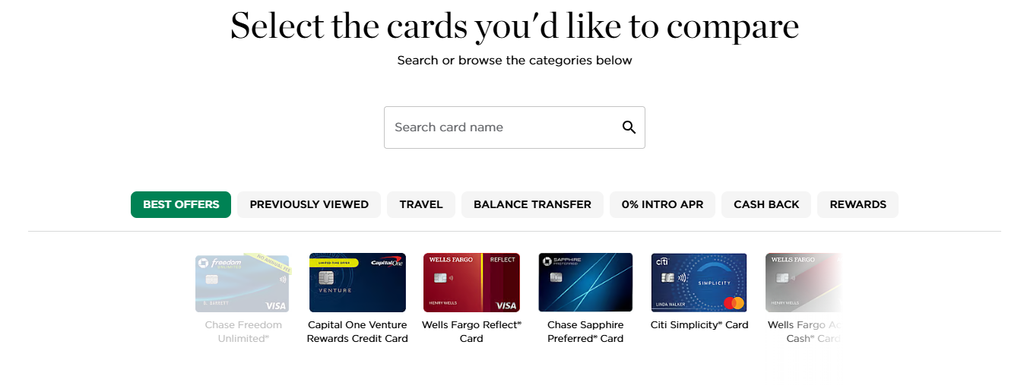
That’s why many people use dedicated comparison sites instead, which aggregate several cards onto one page, making for straightforward comparison. While many of these sites are trustworthy, they still need to make money somehow, so it’s understandable if you’re skeptical about whether they’re as accurate as they seem to be. Let’s look into how comparison sites work to determine ‘Are Credit Card Comparison Sites Accurate’.
Reasons People Are Wary of Credit Card Comparison Sites

There are several reasons why someone might be hesitant to use a comparison site to help them choose a new credit card.
Affiliate Incentives
Credit card comparison sites earn money by partnering with advertisers — the credit card companies — by steering customers toward them. They do this by using affiliate links, which means they can earn commissions when a user clicks a link, gets approved for a card, or opens an account.
Unsurprisingly, this compensation often determines which products these sites feature in the first place. It can also influence where certain products or offers appear on the webpage, such as positioning partners’ products higher on the page or giving them a more favorable ranking. And because some comparison sites have very few partners, they might not give you very many choices.
Still, the best sites maintain some level of editorial independence, allowing their writers to be forthcoming in their reviews about both the benefits and drawbacks of a certain product.
Outdated Information
Some comparison sites aren’t updated as frequently as they should be. And when characteristics like APRs and rewards can heavily influence your decision, it’s not good to be wrong here.
One area where outdated information can be especially problematic is with bonus offers. Offers like cash, points, or miles bonuses, as well as intro APRs, could sway you toward one option over another. If these offers expire, or if the terms change, you could end up basing your decision on inaccurate data.
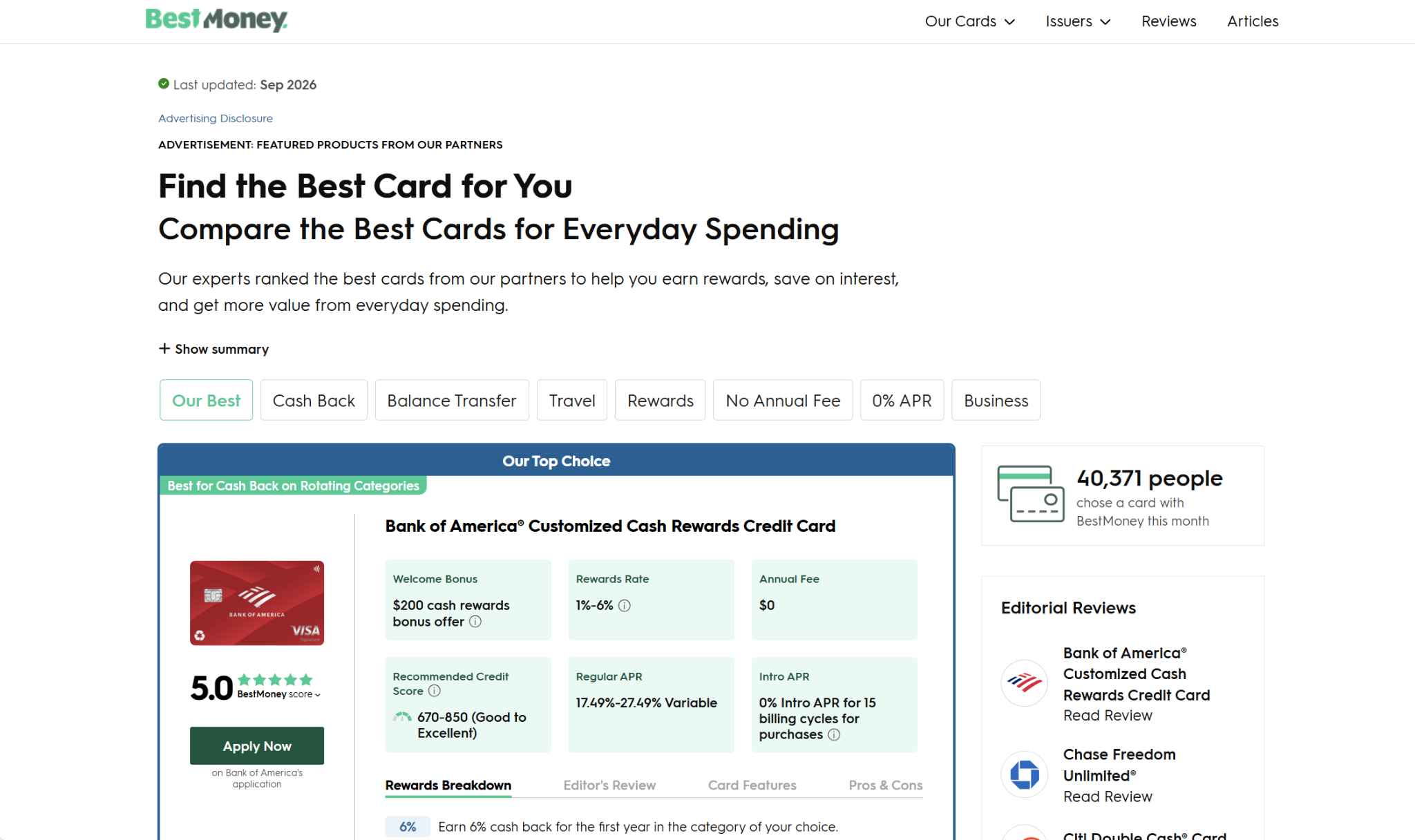
For example, let’s say that a card comparison site advertises a cash rewards bonus offer of $200 once you make over $2,000 in purchases during the first six months. If the terms change, with the threshold for purchases going up to $2,500, or the bonus timeline going down to three months, you might not know it until it’s too late.
Unclear Rating Methodologies
Most comparison sites assign each credit card a rating and review, giving you a sense of which cards are the all-around “best.” However, the best sites make their rating methodology very clear, telling you which credit card characteristics they considered and potentially publishing how they weighted them. Some sites are not as transparent, making it questionable whether the assigned rating was actually calculated through a rigorous process or if it was just invented out of thin air.
Pushy Marketing
While the choice to apply is ultimately up to you, credit card comparison sites strongly encourage you to do so, with affiliate links directing you straight to the application pages for their respective credit cards. This can somewhat oversimplify the decision-making process, as you really should only apply once you’ve prequalified for a card or have a strong enough credit profile to where your approval odds are high.
Applying when there’s a decent chance you won’t qualify can be risky, as each credit card application results in a hard credit inquiry, lowering your credit score for up to a year. If you apply and are then rejected, you might be tempted to apply for a different card, racking up multiple hard credit pulls within a short period of time.
Inconsistent Reward Calculations Across Sites
When visiting comparison sites, keep in mind that each one has its own unique way of calculating credit card rewards, which can be particularly problematic when you’re dealing with points or miles. Sites like The Points Guy, Credit Karma, and Upgraded Points, which are all reliable sites, could show you different valuations for points and miles, making it challenging to know which resources to believe.
When using lesser-known credit card comparison sites, be sure to keep an eye on when the rewards valuations were last updated to ensure you’re viewing up-to-date data.
What the Best Credit Card Comparison Sites Have in Common
Despite the affiliate relationships, comparison sites can still be trustworthy resources for finding accurate credit card information.
Here’s what you should look for when picking one.
Affiliate Disclosures
Comparison sites are legally required by the FTC to disclose affiliate relationships, so any reputable site should publish this disclosure.
But even if a site technically publishes it, this doesn’t mean that they’ll make it easy to find. Some sites bury this disclosure, making it hard to locate, so it’s possible that someone could visit a site and be unaware of its partnerships with credit card companies. The most trustworthy sites do the opposite and are fully transparent about their affiliate relationships and how they work.
For example, BestMoney and NerdWallet both have sections on their sites called “How We Make Money,” clearly explaining that they receive compensation from partners and that this compensation may influence where the partners’ products are positioned on the site. Bankrate has a separate “How We’re Paid” section, as well as an advertiser disclosure on its “Best Credit Cards” page.
Plenty of Credit Card Options

When you’re visiting a card comparison site, it’s somewhat of a red flag if they only give you two or three options. While this doesn’t necessarily mean that the site has inaccurate information, it’s just not going to be as helpful to you. The best sites will give you plenty of options; some more than others, but as long as a site has enough for you to get a good comparison going, then it could be a useful resource.
Regularly-Updated Offers
A strong bonus offer can sometimes be the deciding factor when you’re torn between two credit cards. In general, a site should tell you when its credit card information was last updated, and often it will tell you both the month and the year.
Clear Filtering Tools
Many card comparison sites have a filtering system that helps you narrow down the list. Filters let you hone in on the cards that meet the exact criteria you have in mind, and shortening the list of cards makes it easier to see how they stack up against each other.
You can often filter by the card type, such as cash back, travel, airline, college student, no annual fee, balance transfer, secured, unsecured, or business. Commonly, you can also filter to find cards that could be a good fit for your credit score.
Side-by-Side Comparisons

Credit card comparison sites should present the same details for each card, structuring it in the same way so you can compare the features across cards.
For instance, BestMoney publishes each card’s welcome bonus, rewards rate, annual fee, recommended credit score, regular APR, and intro APR. For every card, it formats this information the same way and positions it in the same place. Some sites go a step further, including a separate side-by-side comparison tool, where you can select a few cards and view all their features on one screen. WalletHub lets you choose up to seven cards to compare side by side, and the different characteristics are nearly organized in a table format. Bankrate, Finder, and NerdWallet all have similar tools, although you can’t compare as many cards at once.
Transparent Rating Methodologies
If a comparison site assigns a rating to a credit card, it’s critical that they back this rating up. The top sites clearly present the underlying methodology, giving you an idea of how the editorial team came up with them. Some of these sites will show you the exact formula used, but even if not, it can still provide a detailed overview of common variables like rewards, fees, APRs, and customer experiences.
In-Depth Reviews
Beyond listing out the basic features and including affiliate links, it’s common for comparison sites to publish in-depth editorial reviews as well, giving you more context than the overall score. These types of reviews typically start with a broad look at the pros and cons. Then, they dive deeper into features like APRs, fees, rewards structures, the application process, and customer support.
Although you’ll see this less often, some sites also have areas for users to leave their own ratings and reviews, so combined with editorial reviews, this can give you a balanced perspective on a certain card.
Using Credit Card Comparison Sites Effectively

It’s natural to be a little suspicious of comparison sites at first, especially when it’s related to something as consequential as personal finance and credit building.
But while it’s true that these sites operate through affiliate links, earning commissions from partnering credit card companies, this fact doesn’t automatically make them untrustworthy. Despite these advertiser relationships, many of these sites still have strict editorial policies and are committed to providing accurate information to help users in the decision-making process.
While it’s certainly possible that you’ll encounter incorrect or outdated information on a comparison site, many of the top-ranked sites are reputable resources that keep their data current. Note that you don’t have to look for sites that are entirely devoted to credit cards — what you’ll usually see instead are broader financial comparison sites that include credit cards among other products, like those for insurance, banking, and loans.
So, if you’re searching for a new credit card, what I’d suggest doing is visiting multiple comparison sites instead of just one. Part of this comes down to the affiliate relationships: One site may partner with credit card companies that the other doesn’t, so the product coverage can differ. And in general, it’s a good idea to compare information across sites to get a well-rounded look at your options.